
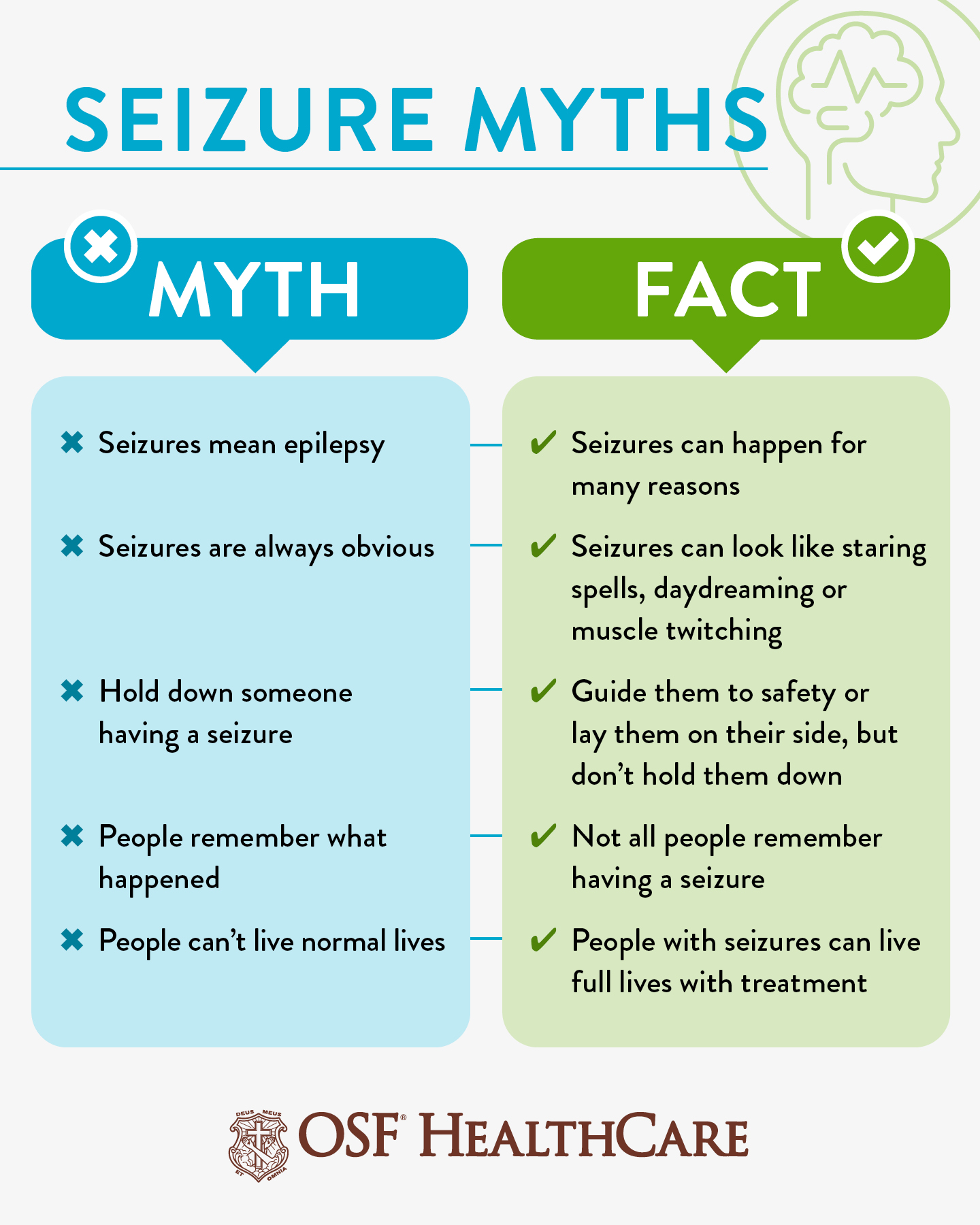
Information about epilepsy and seizures can be confusing, and there’s a lot of misinformation out there. Understanding the difference between seizures vs. epilepsy and separating facts from myths can help you feel more informed, confident and ready to support someone you love.
Thandar Aung, MD, a neurologist at OSF HealthCare Illinois Neurological Institute, shares what concerns she hears most often and helps break down what’s true, what’s not and what really matters.
What is epilepsy and what causes it?
Epilepsy is a neurological condition in which the brain produces repeated, unprovoked seizures. It can look different from person to person, and no two experiences are exactly the same.
Epilepsy has many possible causes. In some cases, it is genetic, meaning it can run in families. In other cases, it may be linked to brain injuries, illnesses or other medical conditions. For many people, however, the exact cause is unknown – and that’s very common.
Many people live with epilepsy, and with the right care and support, it can often be well managed.
What Is the Difference Between Seizures and Epilepsy?
A seizure is a single, temporary event that happens when a sudden surge of abnormal electrical activity briefly overwhelms the brain’s normal signaling. Many things can cause seizures, including epilepsy. You can have seizures without epilepsy.
Epilepsy is a neurological condition where a person has recurrent seizures that are caused by the condition. Epilepsy is diagnosed when those seizures happen without a clear, temporary trigger.
Concern: Epilepsy is Dangerous to Live With
Worries about safety are among the most common concerns people have after an epilepsy diagnosis. Some people even worry that you can die from epilepsy and seizures. Most seizures end on their own, and rare complications are uncommon. However, seizures can lead to falls and injuries, including dangerous head injuries. Treating and managing epilepsy can help reduce your risk of serious injuries and other complications.
Most seizures do not cause brain damage. Longer or repeated seizures may need urgent care.
“Most seizures less than five minutes do not cause any brain damage,” Dr. Aung said.
The question of how long people with epilepsy live depends on many factors, including treatment and overall health. Most people with epilepsy live full, long lives. Life expectancy depends on many factors, including the cause of the epilepsy, how well seizures are controlled and your overall health. The encouraging news is that proper treatment and good seizure control reduce risk of complications.
When to talk to a provider:
- If you’ve experienced a seizure for the first time
- If your seizures are changing or more frequent
- If you’re unable to recover after a seizure within a few hours
Call 9-1-1 or seek emergency care if:
- A seizure lasts more than five minutes
- Seizures happen back to back without recovery in between
- You don’t return to normal awareness after the seizure ends
Concern: Epilepsy Can’t Be Cured
While there no single cure works for everyone with epilepsy, it can often be well managed, and people with epilepsy can live full, active lives.
“We may not have a universal cure, but we very often can control it. Sometimes people become seizure-free long term,” Dr. Aung said.
Many people become seizure-free long-term with medication, while others benefit from specialized treatments, including surgery, which can eliminate seizures entirely in some cases. And some children may even grow out of epilepsy over time.
A diagnosis of epilepsy is not a life sentence of seizures. While there is no cure for epilepsy, the right treatment plan can help you live safely and confidently.
Concern: Epilepsy Is a Mental Illness
Epilepsy is not a mental illness. Epilepsy is a neurological condition that affects the way your brain works, not a disorder of personality, intelligence or character.
However, epilepsy can affect emotional well-being, which is why whole-person care matters. Having seizures, managing treatments and worrying about living with epilepsy can cause you to feel anxious or depressed. Finding the right treatment for your epilepsy and any mental health conditions that happen can help you live a full life.
“We’re not just treating the events themselves,” Dr. Aung said. “We’re trying to reduce that fear, restore confidence and help people feel in control of their lives again.”
Concern: Blinking Lights Cause Seizures
For some people, flashing lights or certain visual patterns can trigger seizures. This is known as photosensitive epilepsy. High-profile examples – like the Pokémon episode that was pulled from the air due to its flashing visuals – have helped raise awareness of this risk.
The good news is that these triggers are often manageable. Simple changes – like adjusting screen settings, avoiding high-contrast flashing visuals or, in some cases, using specialized glasses for epilepsy – can help reduce your risk and make everyday activities safer.
Concern: People With Epilepsy Can’t Live Independently
Many people are concerned about questions like whether people with epilepsy can drive or if epilepsy is considered a disability.
People with epilepsy can and often do live independent lives. Depending on state requirements, many people can safely drive once their seizures are well controlled. In some cases, individuals may qualify for disability support, but this varies based on how epilepsy affects their daily life.
What Happens During a Seizure?
Seizures can look different depending on the type.
Common bodily impacts of a seizure may include staring spells or a brief loss of awareness, involuntary movements or shaking and confusion once the seizure has ended.
It’s also important to know that not all seizures look dramatic. Some can be very subtle and just look like confusion or daydreaming, which makes them easy to miss – both for you and for others around you.
Living With Epilepsy
People have been living with epilepsy for centuries. Well-known historical figures like Caesar are said to have had epilepsy. Even St. Valentine – the saint associated with the February 14 holiday – is the patron saint of epilepsy.
Today, thanks to advances in technology and treatment, epilepsy is more manageable than ever.
With the right treatment and support, many people with epilepsy are able to live full, independent lives. That can include working, driving safely when seizures are controlled, raising a family and staying active in the things that matter most to you.
“Epilepsy is just one part of your life, not what defines it,” Dr. Aung said.
When Should You Talk to a Provider?
It’s important to seek care if you or a loved one has:
- A first-time seizure
- Unexplained loss of awareness
- Repeated seizures
- Concerns about safety, memory or daily functioning
Early evaluation can help identify causes and create a plan that works for you.
This content is for informational purposes only and is not a substitute for professional medical advice, diagnosis or treatment. Always consult your provider.
Think you might have epilepsy?
Last Updated: September 4, 2026