
Many respiratory illnesses share overlapping symptoms. Fever, cough, congestion, sore throat and fatigue can all show up with COVID-19, flu, RSV, the common cold or allergies. No wonder it’s hard to know what you or your family might have.
Get care now
So how can you tell the difference? And does it even matter?
In most cases, these illnesses are all treated with rest, fluids and symptom relief. But some conditions, like COVID-19, RSV, colds and the flu, can progress more quickly, especially in young children, older adults and people with chronic conditions. Knowing what you’re dealing with helps you monitor symptoms, lower the spread and get the right care sooner.
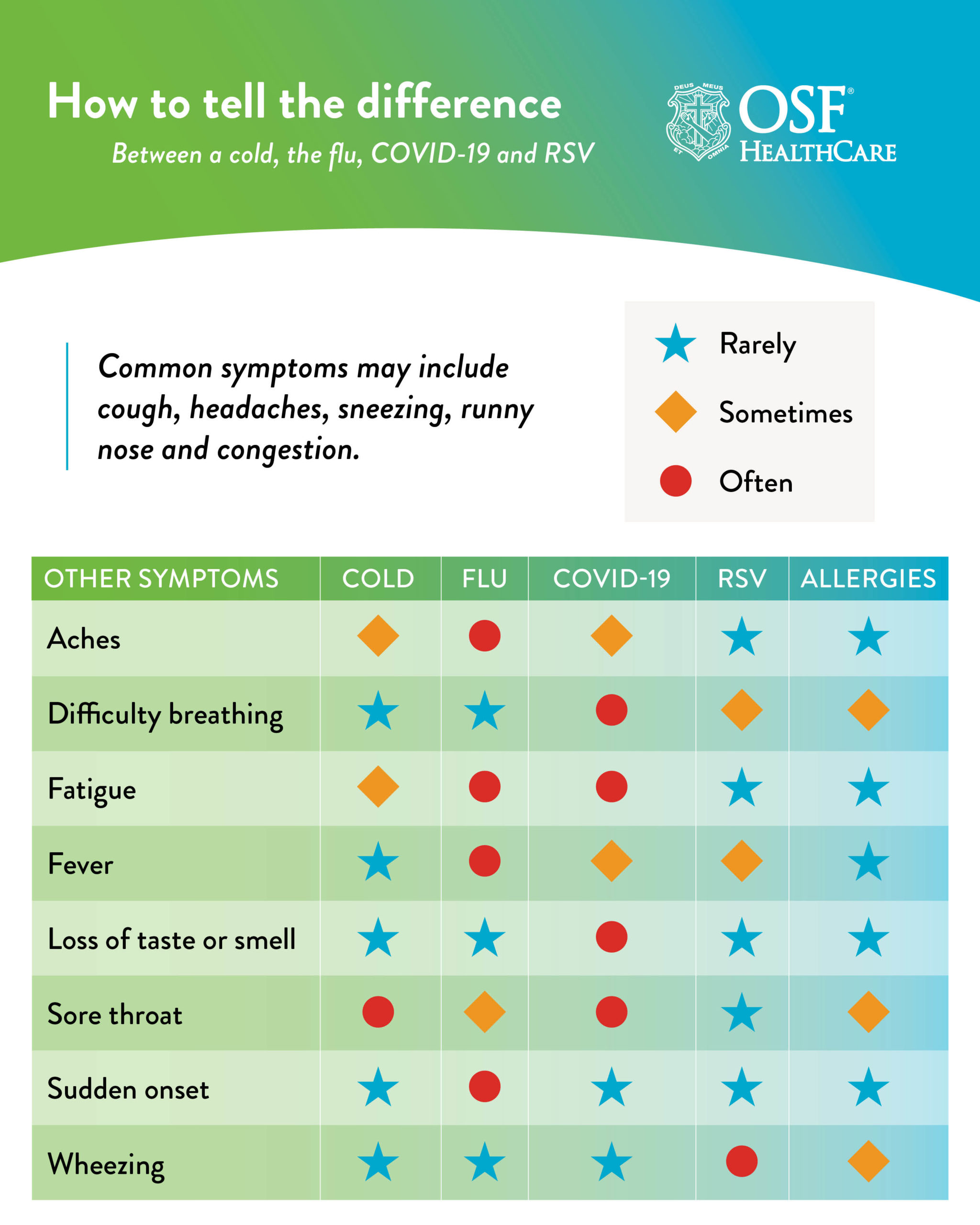
These are the biggest differences between illnesses:
- COVID-19: More likely to cause loss of taste or smell and shortness of breath
- RSV: Often causes rapid breathing, wheezing and symptoms that worsen quickly in infants
- Flu: Has a sudden onset, high fever and body aches.
- Colds: Generally milder, no high fever
- Allergies: Itchy eyes, symptoms triggered by environment, no fever
Can you have more than one illness at the same time?
Yes, it’s possible to catch more than one virus at a time, especially during fall and winter. You could have the flu and COVID-19 at the same time, or RSV on top of a regular cold. When illnesses overlap, symptoms can hit harder and stick around longer. If your symptoms suddenly get worse, especially with a high fever or trouble breathing, call your primary care provider.
Which illness is more contagious?
Some illnesses spread more easily than others, and how quickly they spread can depend on each person’s immune system, age and overall health.
COVID-19 is highly contagious, especially newer variants, and can usually spread the quickest at home, school and crowded indoor spaces. RSV also spreads extremely easily in infants, toddlers and families who live close together. The flu is contagious, but usually not as rapid-spreading as COVID-19. The common cold is still contagious, but generally milder and slower to spread. Allergies are not contagious at all.
COVID-19 Symptoms and Prevention
COVID-19 symptoms often include loss of smell, which is less common with flu, RSV or allergies. Other symptoms of COVID-19 include:
- Fever or chills
- Dry cough
- Shortness of breath or difficulty breathing
- Fatigue
- Muscle or body aches
- Headache
- New loss of taste or smell
- Sore throat
- Congestion or runny nose
- Nausea or vomiting
- Diarrhea
How to protect yourself from COVID-19
- Get vaccinated or if you’re already vaccinated, get your booster.
- Wear a face mask when you go out in public as required by CDC guidelines and based on the transmission rate in your community.
- Wash your hands often with soap and clean, running water for at least 20 seconds. If you don’t have access to soap and water, use an alcohol-based hand sanitizer often. Make sure it has at least 60% alcohol.
- Don’t touch your eyes, nose, or mouth unless you have clean hands.
- As much as possible, don’t touch “high-touch” public surfaces such as doorknobs. Don’t shake hands.
- Cough or sneeze into a tissue, then throw the tissue into the trash. If you don’t have tissues, cough or sneeze into the bend of your elbow.
- Stay away from people who are sick.
- Check your home supplies. Consider keeping a two-week supply of medicines, food and other needed household items.
- Don’t share eating or drinking utensils with sick people.
- Don’t kiss someone who is sick.
- Clean surfaces often with disinfectant.
Flu symptoms and prevention
Flu can lead to serious complications, such as pneumonia and even death. What may seem like a cold could actually be the flu. Flu symptoms tend to come on suddenly and may feel more intense than a cold.
Symptoms of flu may include:
- Fever or feverish/chills
- Cough, muscle or body aches
- Headache
- Fatigue
- Runny or stuffy nose
- Sore throat
How to protect yourself from the flu
- Get a flu shot as soon as it is available each year. The CDC recommends infants over the age of 6 months and all children and adults get vaccinated every year. If a child is under 8 and has never had a flu shot, they will need to get two doses one month apart.
- Wash your hands before eating and don’t put your hands near your face or in your mouth. Wash for at least 20 seconds; regular soap will do.
- If someone in your family has the flu, keep surfaces clean of the virus by wiping them with a cleaning solution containing chlorine, hydrogen peroxide, detergents, iodophors or alcohols. Flu viruses are also killed by heat above 167 degrees.
- Raise the humidity in your home or workplace. The flu bug exists in higher quantities in dry nasal and oral passages. By increasing the humidity, your body will be better able to flush out the flu bug.
RSV symptoms and prevention
With RSV, symptoms usually show within four to six days after getting infected.
Symptoms of RSV infection usually include:
- Runny nose
- Decrease in appetite
- Coughing
- Sneezing
- Fever
- Wheezing
These symptoms usually appear in stages and not all at once. In very young infants with RSV, the only symptoms may be irritability, decreased activity and breathing difficulties.

How to prevent RSV
- Wash your hands frequently.
- Avoid close contact with sick people.
- Avoid touching your nose or eyes, especially while around sick people.
- Clean surfaces with disinfectants that kill viruses to halt the spread of colds.
In addition, people with cold-like symptoms should not interact with children who are at high risk for severe RSV disease. Those at high risk include premature infants, children younger than age 2 who have chronic lung or heart conditions and children or adults with weakened immune systems or neuromuscular disorders.
Cold symptoms and prevention
A cold could be triggered by more than 200 different viruses. While it can make you feel miserable, it is relatively harmless. A cold usually clears up by itself after a period of time, although it can sometimes lead to a secondary infection, such as an ear infection.
Common symptoms may include:
- Sneezing
- Stuffy nose
- Sore throat
- Mild to moderate chest discomfort
- Cough
How to protect yourself from the common cold
- Wash your hands frequently.
- Avoid close contact with sick people.
- Avoid touching your nose or eyes, especially while around sick people.
- Clean surfaces with disinfectants that kill viruses to halt the spread of colds.
Allergy symptoms and prevention
Allergies are typically chronic conditions presenting with symptoms off and on depending perhaps on the season or your environment. Allergies do not cause fever.
Allergy symptoms may include:
- Itchy eyes
- Runny nose
- Sneezing
- Nasal congestion
How to prevent allergies
You can help prevent the symptoms by:
- Controlling your environment, such as using air conditioning during pollen season, changing your air filters regularly or getting an air purifier.
- Staying away from areas where there is heavy dust, mites, molds.
- Keeping away from pets if you have an issue with pet dander.
Getting Care
If you’re not sure about some of the symptoms you may be experiencing, start by contacting your primary care provider. They can help determine next steps, including testing or treatment.
If you need care sooner, you can visit OSF OnCall Urgent Care, which offers in-person or virtual visits with a health care provider. You can also chat with Clare, our chatbot, to check your symptoms and get help finding the right type of care.
Last Updated: February 2, 2026