
Living with diabetes means giving your body daily attention. That can feel stressful, but the good news is you don’t have to do it alone. With a structured diabetes management plan, regular diabetic testing and support from your diabetes care team, you can take control of your health.
Marie Schaafsma, a diabetes educator at OSF HealthCare, shares practical strategies for managing diabetes day to day and reducing some of the stress that comes with consistent monitoring.
Lifestyle Habits to Help Manage Diabetes
Managing diabetes starts with your everyday choices. A healthy lifestyle, including eating the right foods, regular exercise and taking medications as prescribed, is the foundation of an effective diabetes management plan.
What should people with diabetes eat?
Food plays a big role in diabetes management. Eating three meals a day at the same time each day helps your body use insulin more effectively. It’s best to try to eat meals every four hours, with the last meal being eaten at least two to three hours before bedtime.
“Following a healthy, balanced meal plan that allows for a variety of non-starchy vegetables, lean proteins and fewer processed carbohydrates makes a big difference,” Marie said. “Cutting back on sweets, starches, grains and some fruits can help lower blood glucose readings. Increasing proteins and non-starchy veggies will keep you fuller, longer.”
Meal sequencing is another strategy that those with diabetes can use to help manage glucose levels. It involves eating foods in a specific order.
“Eating non-starchy veggies first, protein and fat second and carbohydrates last can help reduce spikes in blood sugar after meals,” said Marie.
Your primary care physician can connect you with a diabetic educator or dietitian who can help build a diabetes management plan that works for you.
“Your diabetes care team will focus on a plan that fits your lifestyle and helps you make healthy, nutritious choices,” said Marie.
Exercise for Diabetes Management
Exercise is important for managing diabetes. It can improve your blood sugar, help you manage your weight and reduce the risk of complications like heart attack and stroke.
“Any kind of physical activity helps, but something that gets the heart and blood pumping for 15 to 30 minutes each day is ideal,” Marie said.
This could be a vigorous walk, riding a bike, swimming, joining a fitness class or lifting weights.
Diabetes Medication and Care Plan
Taking your medication as prescribed can also be a key part of your diabetes management plan. Many people with Type 2 diabetes take oral medications and some people need insulin shots.
“When taken as prescribed, diabetes medications work alongside healthy habits to help keep blood sugar in a healthy range and prevent complications,” said Marie.
Ready to take control of your diabetes??
Tests for Diabetes and Ongoing Screening
It’s important to stay up to date on all health checks to avoid running into severe complications.
Checking Your Blood Sugar Levels
When your body doesn’t make or respond to insulin properly, your glucose levels may rise. Checking your blood sugar throughout the day, especially before meals, can help you understand how food, exercise, stress and medication affect your diabetes.
“If you only test your blood sugar once a day, the best time is first thing in the morning before you eat anything,” said Marie. “This helps to get a natural, baseline measurement without the influence of recent meals.”
Checking Your A1C Levels
An A1C test measures your average blood sugar over two to three months. Most people with Type 2 diabetes should aim for an A1C of 7% or less, though your provider may set an individual target.
“An A1C is one of the most skipped tests in managing diabetes,” said Marie. “But it’s a really helpful way to see how well your diabetes has been managed over time.”
Plan to get this test every three to six months as part of your diabetic testing routine.
Other Diabetes Screenings
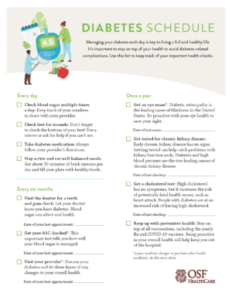
Other essential diabetes screenings include:
- Diabetic eye exam: Detects early changes in the eyes that can lead to vision loss.
- Foot exam: Checks for nerve damage and circulation issues that may cause infections or ulcers.
- Kidney function test: Identifies early signs of kidney damage so treatment can start sooner.
- Cholesterol test: Reveals hidden risks for heart disease, since high cholesterol has no symptoms.
Your Diabetes Care Team
Managing diabetes takes a team. Your diabetes care team may include your primary care provider, diabetic educators, dietitians or specialists like endocrinologists. You may also benefit from digital tools and community-based diabetes support resources.
“Your care team will help you stay on track with tests, lifestyle changes and resources that make living with diabetes easier,” Marie said.
Can you reverse diabetes?
If you’re in the prediabetes stage, lifestyle and diet changes can sometimes reverse the diagnosis.
Once you’ve been diagnosed with diabetes, you cannot reverse that diagnosis. However, you can lower your blood sugar to prediabetes or even non-diabetic levels.
“The primary way this can happen is by maintaining a healthy weight, making healthy food choices most of the time and increasing physical activity,” Marie said.
Living Well with Diabetes
With regular testing, a strong diabetes management plan and the right support, it is possible to live a full, healthy life with diabetes. Staying consistent with your daily care helps keep your blood sugar in a safe range and prevents complications down the road.
If you notice any changes in how you’re feeling, reach out to your health care provide to help you stay on track.
Last Updated: October 17, 2025