
We’ve all been there. One moment you’re at work or running errands; the next, you’re achy all over, wrapped in blankets and sipping soup.
According to the U.S. Centers for Disease Control and Prevention (CDC) , between 3% and 11% of the U.S. population gets the flu each season. Flu activity typically spikes between late October and April, though some seasons last longer.
Brian Curtis, MD, vice president, chief medical officer, OSF Medical Group, helps adults navigate flu season every year. Here’s his updated guidance on how to know if you have the flu, how to treat it at home, how long flu symptoms last and which medications might help you recover faster.
How do you know if you have the flu?
Winter brings a mix of respiratory illnesses like colds, flu, RSV and COVID-19, that can all feel similar at first. So how do you know if it’s the flu or some other illness?
Colds usually ease in gradually. You may start with a runny or stuffy nose, a scratchy throat and mild fatigue that slowly increases over a couple of days.
The flu tends to hit fast and hard. Many people describe waking up suddenly achy, chilled and exhausted, often with a high fever, headache and a cough or sore throat.
“When symptoms hit suddenly, flu becomes our top suspicion,” said Dr. Curtis. “Colds generally don’t knock people down that fast.”
If symptoms come on quickly and intensely, flu is the more likely culprit.
Should I get a rapid flu test?
If you’re unsure whether you have the flu, especially if symptoms are severe or you’re at higher risk, your provider may recommend a rapid flu test. These can confirm influenza A or B and help determine whether you could benefit from antiviral medications.
“A rapid flu test isn’t necessary for everyone, but it can be helpful if you’re high risk or within that 48-hour window when antivirals work best,” said Dr. Curtis.
How long does the flu last?
Most adults recover from the flu in three to seven days, but fatigue and cough may linger for up to two weeks. If you’re received your flu shot, you’re more likely to have a shorter illness and milder symptoms.
The U.S. Centers for Disease Control and Prevention flu guidelines say you can end isolation once you have been fever-free for 24 hours without using fever-reducing medications like acetaminophen or ibuprofen. After this time, it is still possible to spread the virus to others. Using precautions like wearing a mask around others for five days can help reduce the risk.
“Even when your fever breaks, it’s normal to feel wiped out for a week or two,” said Dr. Curtis. “Fatigue is often the last symptom to go.”
How to treat the flu at home
There’s no magic cure for the flu, but the right flu treatment at home can help you get rid of it faster and keep you comfortable.
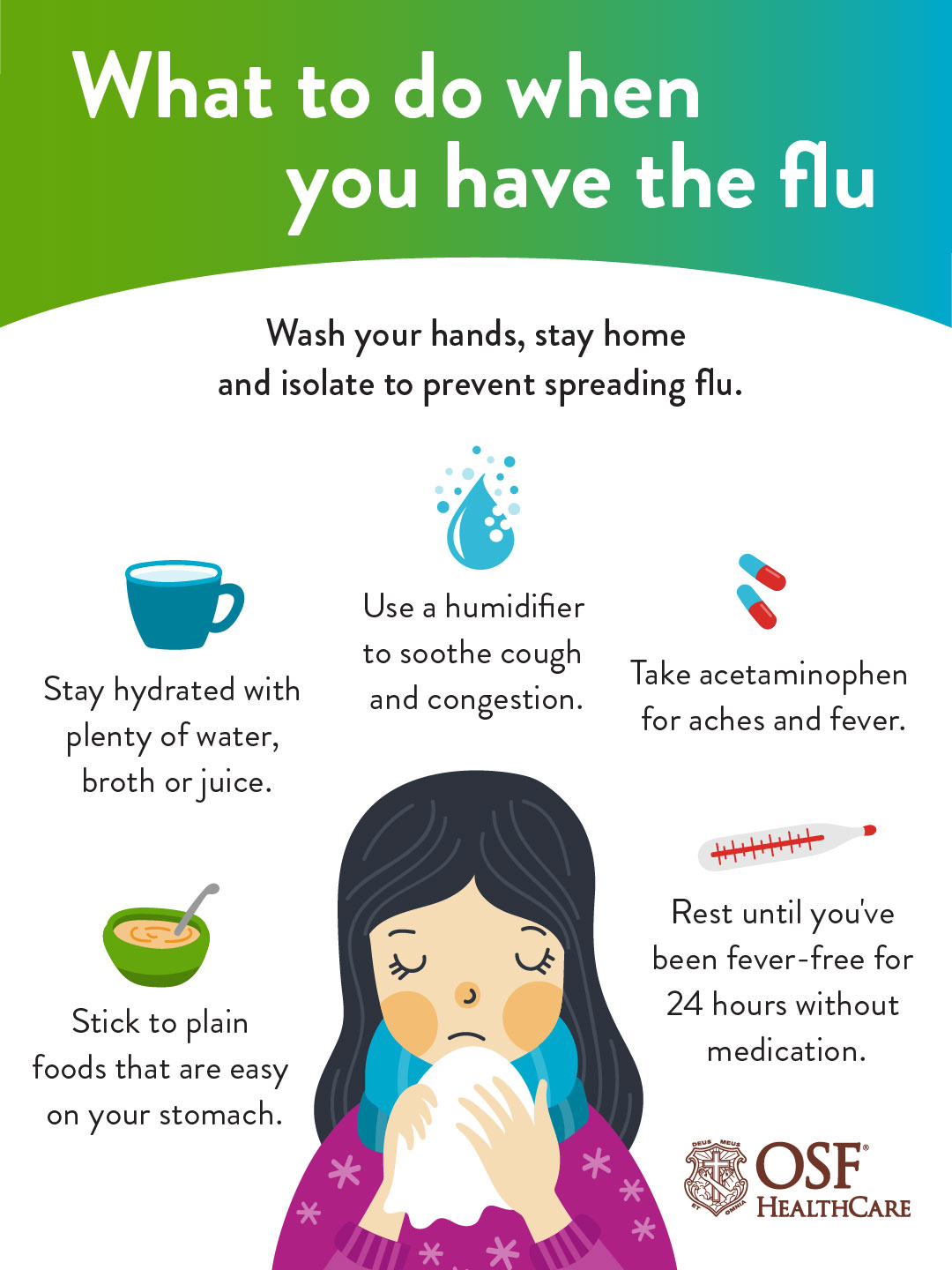
If you have the flu, here is what Dr. Curtis recommends:
- Rest as much as possible. Your immune system works better when you’re not pushing yourself.
- Stay hydrated. Water, broth and electrolyte drinks help prevent dehydration.
- Take acetaminophen or ibuprofen for fever and aches.
- Eat gentle foods like soups, toast, rice, applesauce or bananas.
- Use a humidifier to soothe cough and congestion.
- Wash your hands often to prevent spreading flu to others or reinfecting yourself.
“If you can only focus on two things, make it fluids and fever control,” said Dr. Curtis. “Those alone make people feel significantly better.”
Influenza Treatments
Prescription antiviral medications, such as Tamiflu, can help shorten flu symptoms by about one to two days. These need to be taken in the first 48 hours of getting sick in order to be effective. These won’t cure the flu instantly, but they are considered the best medicine to make your illness milder and reduce the risk of complications.
There are no over-the-counter (OTC) antiviral medications that specifically treat the flu, and antibiotics will not help. While OTC cold and flu medicines may ease fever, congestion or aches, they don’t treat the virus itself.
Your provider may recommend antivirals if you’re at higher risk for serious illness, including if you:
- Are pregnant or breastfeeding
- Are over age 65
- Have chronic health conditions such as asthma, diabetes, heart disease or immune suppression
- Have severe symptoms
Tamiflu is typically considered safe during pregnancy and while breastfeeding, but it’s always best to talk with your provider to confirm it’s right for you.
Does vitamin C help when you are sick?
Vitamin C and zinc may slightly reduce the length of symptoms for some people, but neither is a cure. They’re safe for most adults but always check with your provider if you take other medications.
Feeling crummy?
When to Call Your Doctor
Most people can ride out the flu at home, but there are times when it’s best to call your doctor, including if you have:
- High fever that doesn’t improve with medication
- Symptoms lasting longer than a week
- Signs of dehydration (dark urine, dizziness, dry mouth)
- A cough that gets worse instead of better
If you have severe difficulty breathing, chest pain or pressure, sudden confusion or lips/nails that start to look blue, call 9-1-1 or go to the nearest emergency department.
How to Prevent the Flu
A few simple habits can dramatically lower your risk of getting sidelined by the flu.
Start with the most powerful tool you have: your annual flu shot. It’s quick, safe and still the best way to protect yourself and the people around you.
These everyday habits can also make a big difference:
- Wash your hands often, especially after being in public spaces
- Avoid close contact with anyone who’s visibly sick
- Wear a mask if you’re immunocompromised or caring for someone who is
- Stay home when you’re sick
Taking these small steps helps stop the flu from spreading through your household and community.
Last Updated: January 16, 2026