Respiratory syncytial virus (RSV) is a very common and highly contagious viral infection that affects people of all ages. Each year, RSV season seems to start earlier, last longer and bring more severe cases.
While not a threat to most adults, RSV disease can lead to a serious lung infection called bronchiolitis in some children. RSV is the leading cause of hospitalizations of infants around the world each year.
“Adults with RSV usually just feel like they have a cold,” said Brian Curtis, MD, vice president of clinical specialties for OSF HealthCare. “They often don’t get tested, and many don’t even need to see a doctor.”
But children can have a very different experience.
Why is RSV Worse in Kids?
 Young children respond differently to RSV than adults.
“They have younger immune systems that react more strongly, and their airways are much smaller,” Dr. Curtis explained. “When those airways fill with mucus, they can get into trouble faster than adults.”
Any child younger than grade-school age could be at risk of complications from RSV. But, in general, the highest risk is for those who are the youngest.
Children under 1 year old are at the highest risk for complications from RSV, as are those with certain medical conditions, including:
- Prematurity (born before 37 weeks gestation)
- Lung and heart problems
- A compromised immune system because of illness or medical treatment
RSV Symptoms in Babies and Children
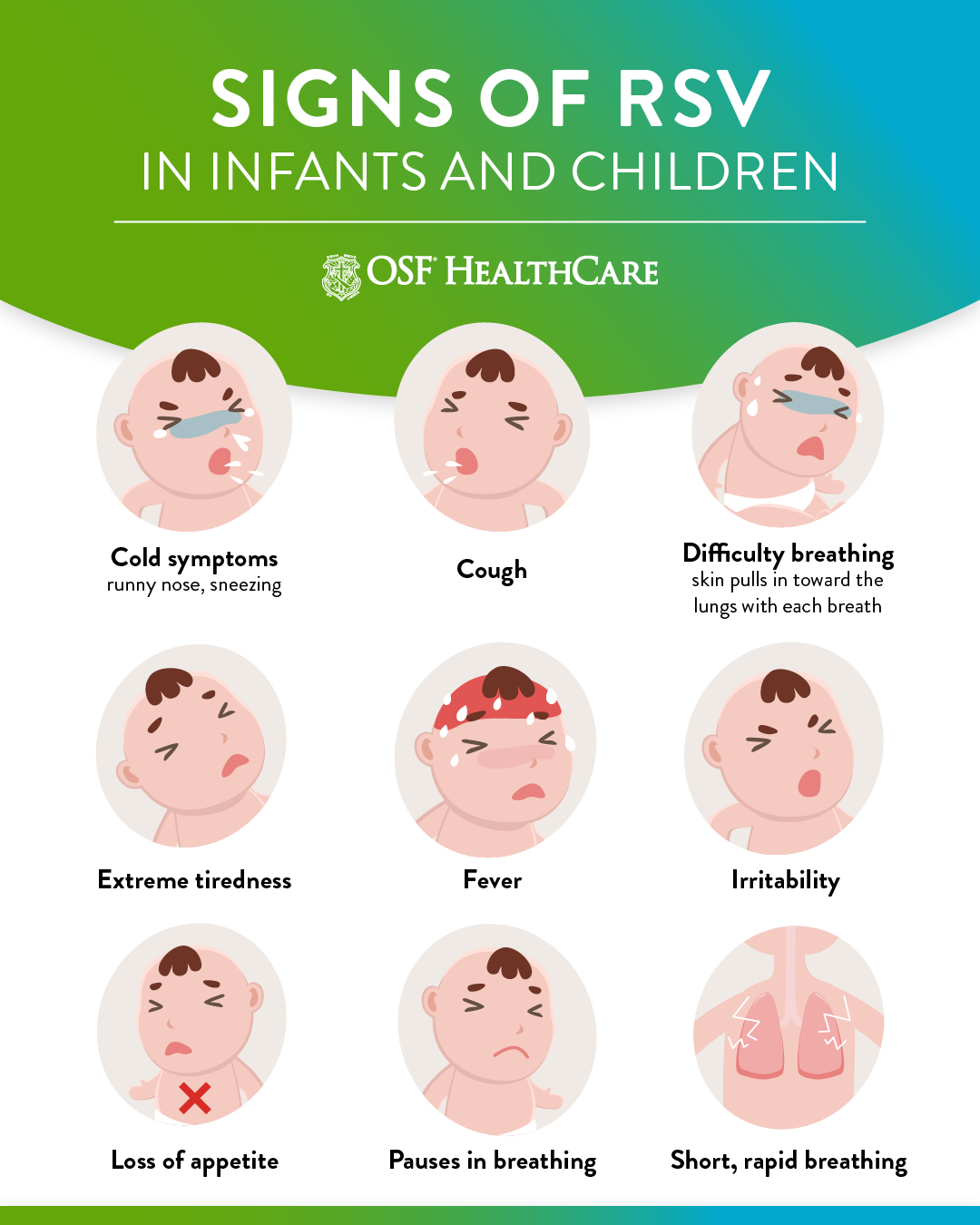
Babies and toddlers tend to have more noticeable or severe RSV symptoms. Look for:
- Runny nose or sneezing
- Cough
- Trouble breathing
- Fever
- Irritability or extreme tiredness
- Loss of appetite
- Wheezing
- Short, rapid or labored breathing
- Pauses in breathing (particularly in infants)
RSV often causes a wet, forceful cough. You may also hear wheezing or noisy, “rumbly” breathing from mucus in the chest.
RSV Symptoms in Adults
Adults usually have milder signs of RSV, including:
- Headache
- Mild cough
- Mild fever
- Sore throat
- Stuffy or runny nose
Even though symptoms may be mild, adults should avoid close contact with infants, older adults and people with weakened immune systems to avoid spreading the virus.
For high-risk older adults, RSV can lead to bronchitis, pneumonia or complications of existing health conditions.
Worried about RSV symptoms?
RSV vs. Croup: What’s the Difference?
Croup and RSV can look similar and are both contagious, but the coughs sound different. An RSV cough is lower in the chest; and sounds wet, wheezy or rumbly. A croup cough is higher in the airway with a distinct barking, seal-like sound.
Listening closely to your child’s cough can help you tell the difference, but when in doubt, call your provider.
Treating RSV
Because RSV is caused by a virus, it can’t be treated with antibiotics. Treatment focuses on helping your child stay comfortable while their body fights off the virus.
If your child has only mild symptoms, try to keep them comfortable at home. Keep them out of school and their childcare centers until their RSV passes. If your child has a fever, check with your pediatrician or family doctor about what medications you can safely use.
You can also use nasal suction (a saline spray or suction tool) to keep your child’s nose and airways clear. This is especially important when they are sleeping and eating.
When to See a Doctor
“If you start to worry about your child breathing on their own, or if they seem like they are spending all their energy on breathing, that would be a worrisome symptom and reason to seek medical attention,” Dr. Curtis said.
Chest retractions are a hallmark sign of difficulty breathing. If you can see the lines between your child’s ribs, a pronounced line between their ribs and stomach, a notch between their clavicles (collarbones) or their skin pulling in toward the lungs with each breath, they should be seen by a medical provider immediately.
“The most significant thing you can look out for in kids who are under 6 months old would be pauses in breathing. If it’s 15 to 20 seconds, that could be very worrisome, and you should seek medical attention immediately,” Dr. Curtis said.
You should also be on the lookout for signs of dehydration including a significant decrease in how much your child is eating, drinking or urinating.
How long does RSV last?
RSV typically lasts five to seven days, but symptoms can linger. Some children may cough for several weeks, especially after a more severe infection. If your child’s cough is getting worse instead of better, lasts longer than three to four weeks or comes with breathing problems, contact your pediatrician.
How to Avoid RSV
To keep you or your child from getting RSV:
- Wash your hands, especially when you are caring for a very young infant.
- Keep newborns and young children away from others who show signs of illness. For children under 2 months of age, even mild illnesses like colds or sniffles could be dangerous.
In addition, a new RSV vaccine is now available to help protect certain high-risk groups, including pregnant women (from week 32 to week 36 of gestation), babies and adults over the age of 60.
How to Avoid Spreading RSV
RSV spreads easily, especially in homes with young children. Here are the basics to protect others:
- Wash hands often, especially after wiping noses or touching shared surfaces
- Avoid close contact with newborns, older adults or anyone high-risk
- Cover coughs and sneezes with a tissue or your elbow
- Wipe down toys, doorknobs and countertops daily
- Avoid sharing cups, utensils, towels or pacifiers
- Stay home when sick, and only return to school, daycare or work when symptoms improve and fever is gone
Last Updated: January 5, 2026