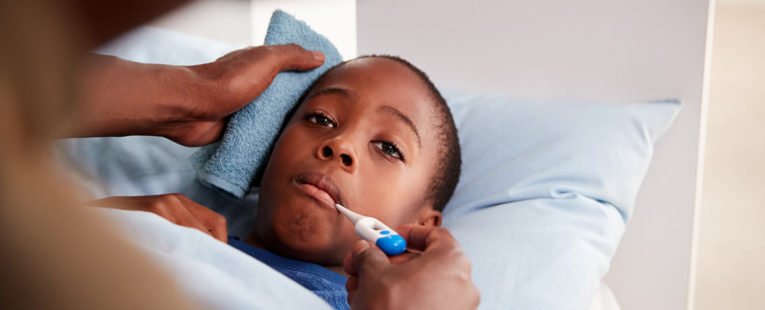
Parenting is hard enough. Throw in a fever and your worry can skyrocket. The good news? While your child’s temperature may make you wonder if they’re sick, typically, a hot forehead is nothing to lose your cool over.
What is a fever?
A fever itself isn’t actually an illness. It’s a symptom and a sign that your body’s natural defense against infection is working. When your child encounters a virus or bacteria, their immune system raises their internal temperature to fight it off.
“A fever tells us your child’s immune system is doing exactly what it’s supposed to do,” said Brian Curtis, MD, vice president, chief medical officer, OSF Medical Group. “It’s one of the body’s most effective tools for clearing an infection.”
Fever won’t go away?
Common Causes of Fever in Children
Kids can feel warm for many reasons, including crying, playing too hard, teething or simply being in a hot environment. The only way you can tell for sure that your child has a fever is to take their temperature with a thermometer.
A fever can happen for many reasons, including:
- Viral infections, like a cold, the flu, RSV or COVID-19
- Bacterial infections, like an ear infection or strep throat
- Normal immune response to a vaccine
- Allergic reactions
When it’s a fever from an illness, your child likely will show other symptoms, like tiredness, fussiness, chills, runny or stuffy nose or cough.
What temperature is considered a fever for a child?
You’ll need to take your child’s temperature with a thermometer to get an accurate reading of how high their fever is. The American Academy of Pediatrics (AAP) recommends using a digital thermometer. It’s best to take the temperature rectally for children ages 3 and younger.
Here is an easy way to know when your child has a fever:
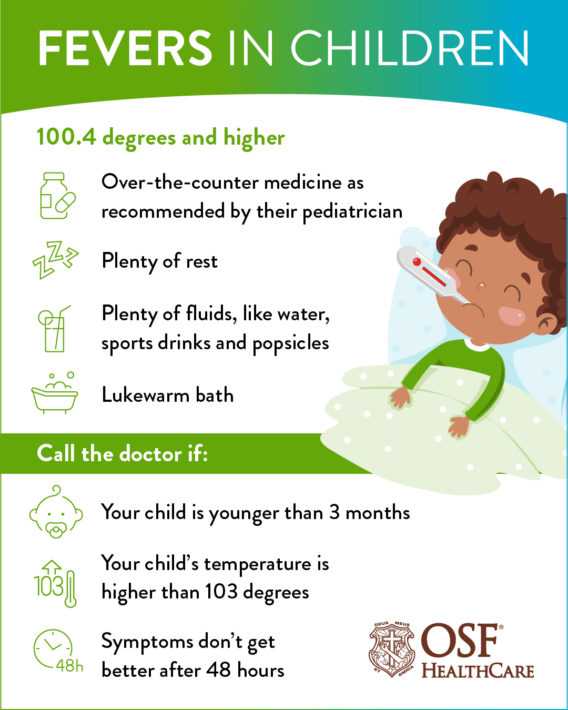
- Normal temperature: 97.7°F to 99.5°F
- Low-grade fever: 99.6°F to 100.3°F
- Fever: 100.4°F to 102.9°F
- High fever: 103°F or higher
How long does a fever last in children?
Most fevers caused by common viral infections last about two to three days, though some can linger up to four, with or without other symptoms. What often worries parents isn’t just the fever itself, but the way it seems to come and go. A child might wake up without a fever, only for it to spike again by evening. A fever may also appear to be breaking, then return a few hours later.
This pattern is completely normal. Fever-reducing medicine works temporarily, so your child’s temperature may rise again once the dose wears off. Immune systems also has natural cycles, so the severity of symptoms can rise and fall throughout the day.
In addition, everyone’s temperature naturally rises in the evening around 6 p.m. So, if your child already had a slightly higher temperature, this normal temperature increase can explain why their fever comes back at night.
“As long as your child is drinking well, interacting with you and not showing concerning symptoms, these ups and downs are typically a normal part of the healing process,” said Dr. Curtis.
Fevers With No Other Symptoms
A fever without obvious symptoms can still be caused by a mild viral infection. Keep watch for:
- Rash
- Runny nose
- Cough
- Ear tugging
- Decreased appetite
- Changes in urine
If your child has a fever with no other symptoms for more than 24-48 hours, call your pediatrician.
When to Worry About Your Child’s Fever
Kids tolerate fevers surprisingly well. What matters most is not how high the fever is, but how your child is acting and whether they have other symptoms.
Here’s when you should call your child’s pediatrician:
- Newborn or infant age 3 months or younger: Any fever (a rectal temperature of 100.4 degrees or higher) should be seen immediately.
- Infant or toddler ages 3 months to 2 years: Fever lasts more than 24 hours
- Children 2 years and older: Fever lasts more than 72 hours
- Any age: Fever higher than 104 degrees; Fever with other symptoms, such as a severe sore throat, severe abdominal or ear pain, severe headache, unexplained rash, repeated vomiting or diarrhea, unusual sleepiness or very fussy behavior; Fever that has worsened since a previous doctor’s visit.
If your child ever has a fever with a seizure, severe pain, trouble waking, a stiff neck, blue lips/nails, nonstop vomiting or diarrhea or if they suddenly get much worse, take them to your nearest emergency department.
“If something feels off or your parent instinct is telling you this isn’t normal, trust that and get care,” said Dr. Curtis.
How to Help Your Child Feel Better
Even if your child acts normally with a fever, their body is still working hard to fight some sort of infection. You can help their body to break the fever and get better faster by treating it.
Do:
- Offer lots of fluids like water, sports drinks, formula or breastmilk and popsicles
- Encourage rest
- Dress them lightly
- Give a lukewarm bath
- Use acetaminophen or ibuprofen if your child is uncomfortable
Don’t:
- Let your child around other children as they may still be contagious
- Let them over-exert themselves, even if they are acting normally
If your child’s temperature is 100.4-102°F and they aren’t showing symptoms like fussiness, dehydration or discomfort, you can often wait on fever medicine.
Once a fever reaches 102-103°F, many children become more uncomfortable and benefit from medicine.
One of the key things to do when your child has a fever is to keep them hydrated. Kids lose fluids faster when feverish. Watch for signs of dehydration, including:
- Dry lips/mouth
- No tears
- Sunken fontanel (soft spot on the top of a baby’s head)
- Fewer wet diapers
- Sunken eyes
- Lethargy
Fever-Reducing Medicine Guidelines
Always use the correct dose of fever-reducing medicine for your child’s age and weight.
- Over 2 years: Follow the label instructions for the specific medication
- Under 2 years: Call your provider or pharmacist for dosing
- Under 6 months: Avoid ibuprofen
- Under 3 months: Avoid fever-reducing medicine unless advised by your provider
- All children and teens: Avoid aspirin. Aspirin use by young people with viral illnesses has been linked to Reye syndrome, a rare but serious disease.
If your child’s fever doesn’t improve within one to four hours of giving medicine, call your provider.
What is a febrile seizure?
There are times when a fever can lead to a febrile seizure or convulsion, particularly in children between the ages of 3 months and 5 years. Although scary, febrile seizures usually only last a few minutes and are not dangerous, but you should still inform your child’s pediatrician.
When is a fever too high?
Our brain knows when our body is getting too hot and is designed to regulate our temperature, keeping fevers due to infection from going over 103 degrees or 104 degrees. They rarely go to 105 degrees or 106 degrees.
While these are “high” fevers, you don’t need to be alarmed because fevers from infections don’t rise high enough to cause brain damage. Dangerously high temperatures (108°F+) come from external heat sources, such as a child being trapped in a hot car.
When to Call Your Pediatrician
If you can’t get your child’s fever down, are unsure how high it’s been or are concerned about how your child is acting, call your pediatrician. They can help you decide what to do next based on your child’s symptoms and age. When you call, have this info handy:
- Highest temperature
- When it started
- Last dose and timing of medicine
- Any symptoms in addition to the fever
This helps your provider guide you quickly and may save an unnecessary office or emergency visit.
Last Updated: February 11, 2026